ServicesPool Drain and Refill
Pool Drain and Refill in Higley
When pool water carries years of dissolved minerals, chemicals stop working the way they should. We drain your pool carefully, clean the empty shell, refill it and balance the new water so it stays easier and cheaper to care for.
Starting over with water that behaves
Every gallon that evaporates from your pool leaves its minerals behind. Top it off with our hard desert tap water often enough and calcium, salts and stabilizer pile up until the water clouds, scales the tile and eats more chemicals each week. At that point no amount of adjusting brings it back into line.
A drain and refill is the honest fix. It costs more on the day than another bottle of clarifier, but it resets the chemistry for a few years, which is usually far less than you would spend fighting tired water month after month. We test first and tell you plainly whether your pool needs it now or can wait.
What the work includes
- Water testing before we start
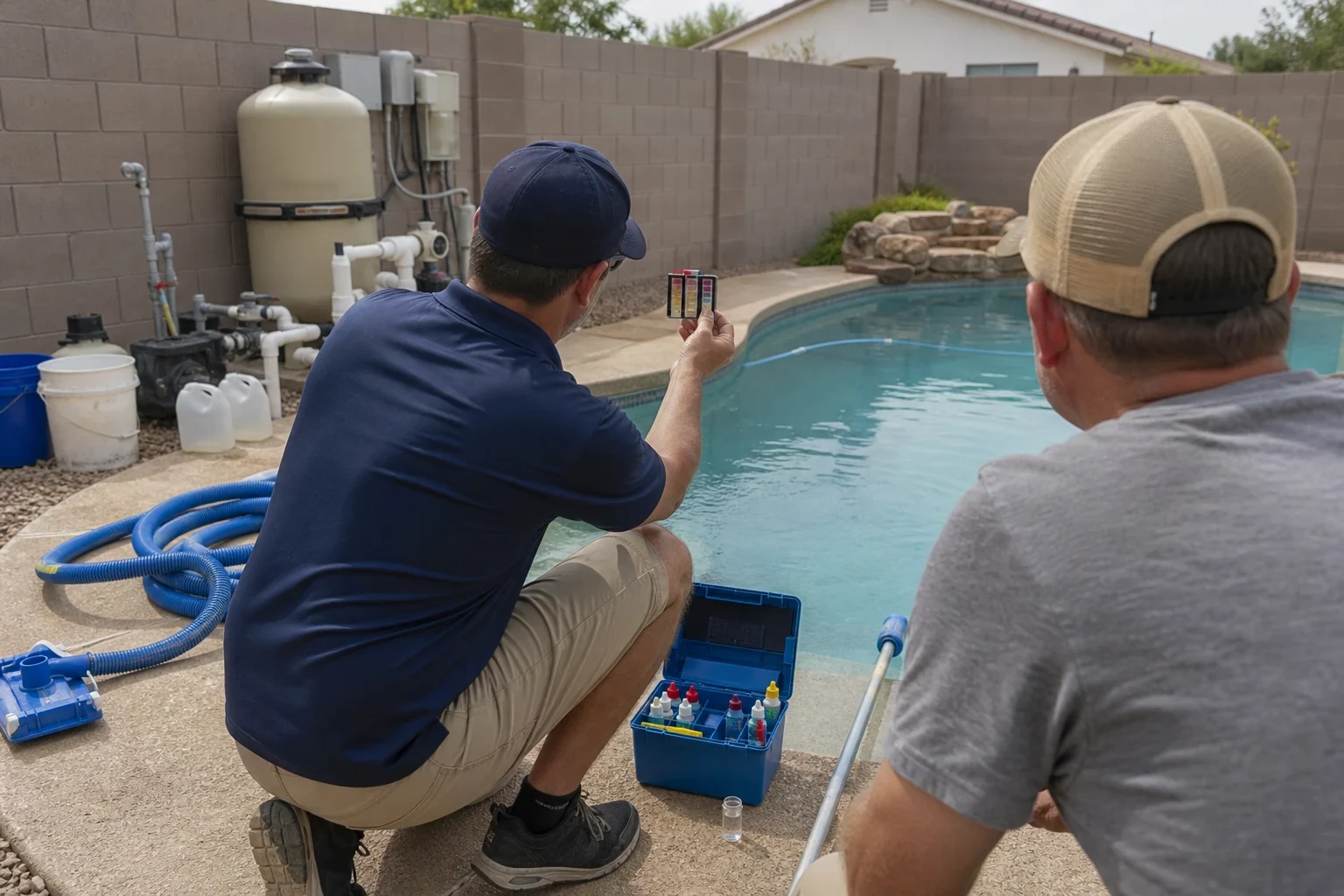
- We check calcium hardness, total dissolved solids and cyanuric acid so the decision rests on numbers. If your water still has life in it, we say so.
- A controlled drain
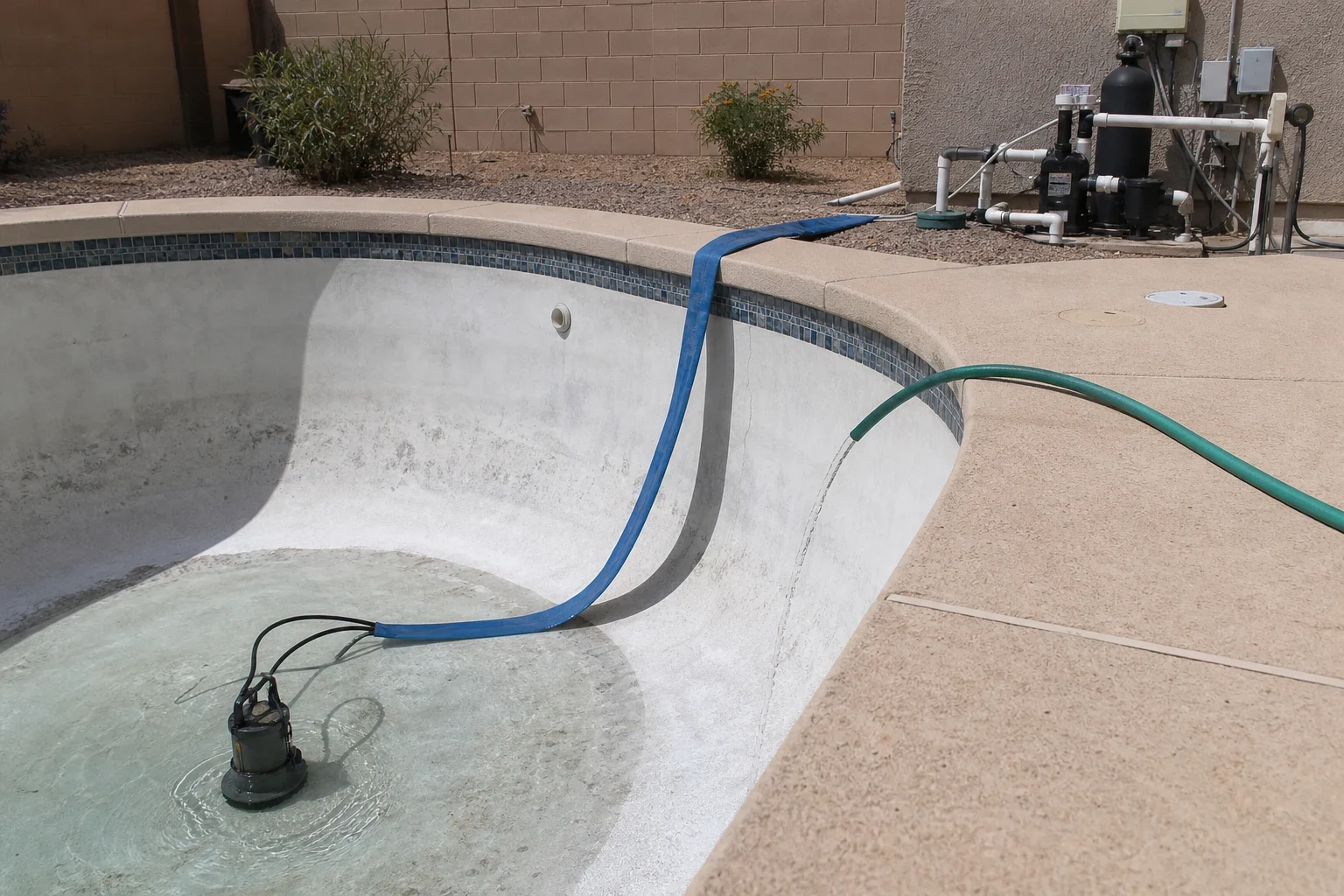
- We use a submersible pump and route the discharge where local rules allow, usually your home's sewer cleanout rather than the street. Your equipment is switched off so the pump never runs dry.
- Care for the empty shell
- With the water out, we look over plaster, tile line and fittings and photograph anything worth your attention. Cracks or loose tile go into a written note, never a surprise invoice.
- Cleaning while it is empty
- We clear debris and sediment from the floor and steps. If stains or scale call for more, an acid wash or calcium removal and tile cleaning can happen in the same window, saving a second drain later.
- Refill and start-up balance
- We refill steadily, then bring pH, alkalinity, calcium and sanitizer into range for your surface. Fresh water treated right from the first day protects the finish for years.
Signs your water is due for a change
Chemicals stop holding
You add chlorine and acid on schedule, yet readings drift within days. High stabilizer and dissolved solids are often the reason.
White crust at the waterline
Calcium scale forms faster when hardness runs high. Scrubbing it away helps for a while, but new water slows it down.
Dull or cloudy water
Water that stays hazy after the filter is cleaned and the chemistry looks right may simply be worn out.
It has been several years
Most pools in our dry climate benefit from fresh water every few years, depending on how much you top off.
After a green recovery
Sometimes draining is the better route than shocking a badly neglected pool. We compare both before Green to Clean Recovery begins.
What moves the price
A drain and refill is priced on the work your pool actually needs, not a flat number that hides extras. We explain each part on the phone so you can weigh it against what tired water costs you in chemicals and surface wear.
Pool size and depth
Larger volumes mean longer pump time and more start-up chemicals.
Added surface work
Pairing the drain with an acid wash or tile cleaning adds labor but avoids paying to empty the pool twice.
Condition of the shell
Heavy sediment, staining or a surface needing repair takes more time once the water is out.
Discharge setup
Distance from the pool to an approved drain point affects hose runs and setup.
How a drain and refill day runs
- 1
Test, quote and timing
We test your water, explain what we found and give you a free quote by phone. We plan around the weather, avoiding the hottest weeks when an empty shell can be stressed by sun and heat.
- 2
Drain with the shell in mind
The pump runs while we watch the water level and the surface. Groundwater pressure can lift an empty pool, so we keep the empty time as short as the work allows.
- 3
Clean and inspect
We clean the shell, check the hydrostatic relief valve where one is fitted and document anything we see.
- 4
Refill and balance
A hose fill takes many hours, often running into the next day. Once full, we balance the water, restart the pump and filter and confirm everything is circulating.
Drain and refill questions
How often should my pool be drained?
For most pools here, every few years is typical. The real answer comes from testing hardness, dissolved solids and stabilizer. We would rather tell you to wait than drain water that still works.
Can draining damage my pool?
An empty pool can shift if groundwater pushes up, and plaster can suffer in extreme heat. That is why we choose mild weather, keep the shell empty only as long as needed and refill promptly.
Where does the water go?
We follow local discharge rules, which usually means routing it to your home's sewer cleanout. We confirm the setup before the pump goes in.
Do I need to be home?
No, as long as we can reach the pool, the equipment and a water spigot. We will let you know when the fill is underway and when the water is balanced.
What happens to the water after the refill?
Fresh water needs careful balancing in its first weeks to protect the surface. Weekly Pool Cleaning keeps it there, and new customers get a free first month of weekly service.
Find out if your water is ready for a reset
Tell us about your pool and how it has been behaving. We will explain whether draining makes sense now and what it involves.