ServicesCalcium Removal and Tile Cleaning
Calcium Removal and Tile Cleaning in Higley
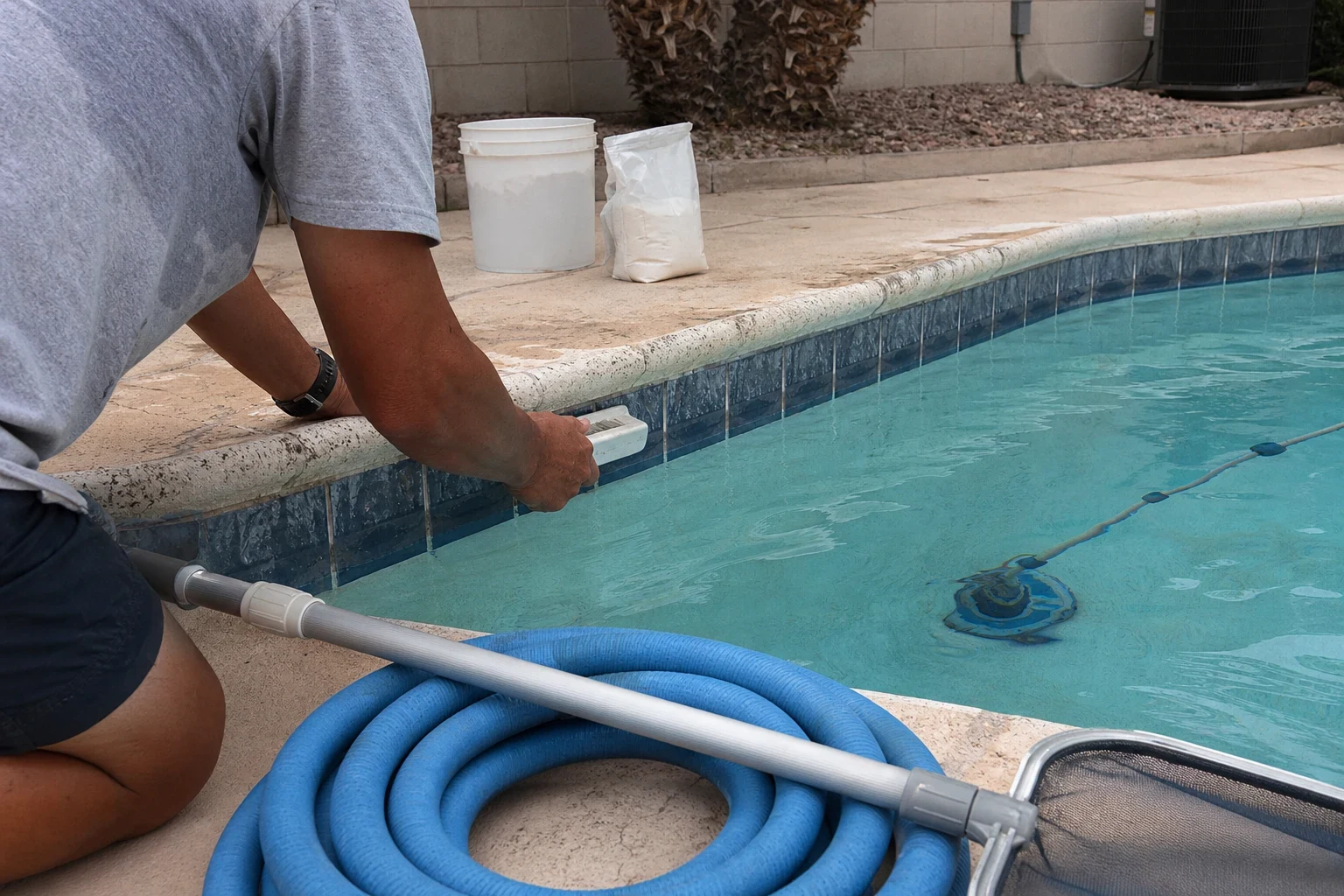
We remove the crusty white band from your waterline tile without scratching the glaze or loosening the grout. Then we balance your water so the scale builds back more slowly. The result is tile that looks right again and costs less to keep that way.
What That Band at Your Waterline Really Is
The white or gray line along your tile is mineral scale. Pool water evaporates quickly in the desert heat, the minerals stay behind, and every top-off brings in more. Over months the film becomes a crust, and the crust hardens into something a brush will not move.
We take it off with the mildest method your tile can handle, then correct the water chemistry behind it. Occasional tile cleaning costs far less than regrouting or replacing a tile line that was scraped too hard or left too long. That comparison shapes every recommendation we make.
Glass, porcelain, glazed ceramic and natural stone each respond differently. We confirm what you have before anything touches it.
What Our Tile Cleaning Includes
- Identifying the scale
- Calcium carbonate is chalky and responds to a mild acid test. Calcium silicate is harder, grayer and barely reacts. Knowing which one you have tells us whether hand work will do or whether media blasting is the better choice.
- Low-pressure media blasting
- For stubborn buildup we use a fine, soft blasting media at controlled pressure. It breaks the scale loose while leaving the tile glaze and the grout lines intact.
- Hand detailing
- Corners, step edges, trim tile and spillways get finished by hand. Machines miss these spots, and they are where scale tends to sit thickest.
- Protecting your finish and deck
- We cover nearby decking and keep media away from skimmers and equipment. Afterward we vacuum the pool floor and rinse the deck so nothing is left behind at your home.
- Rebalancing the water
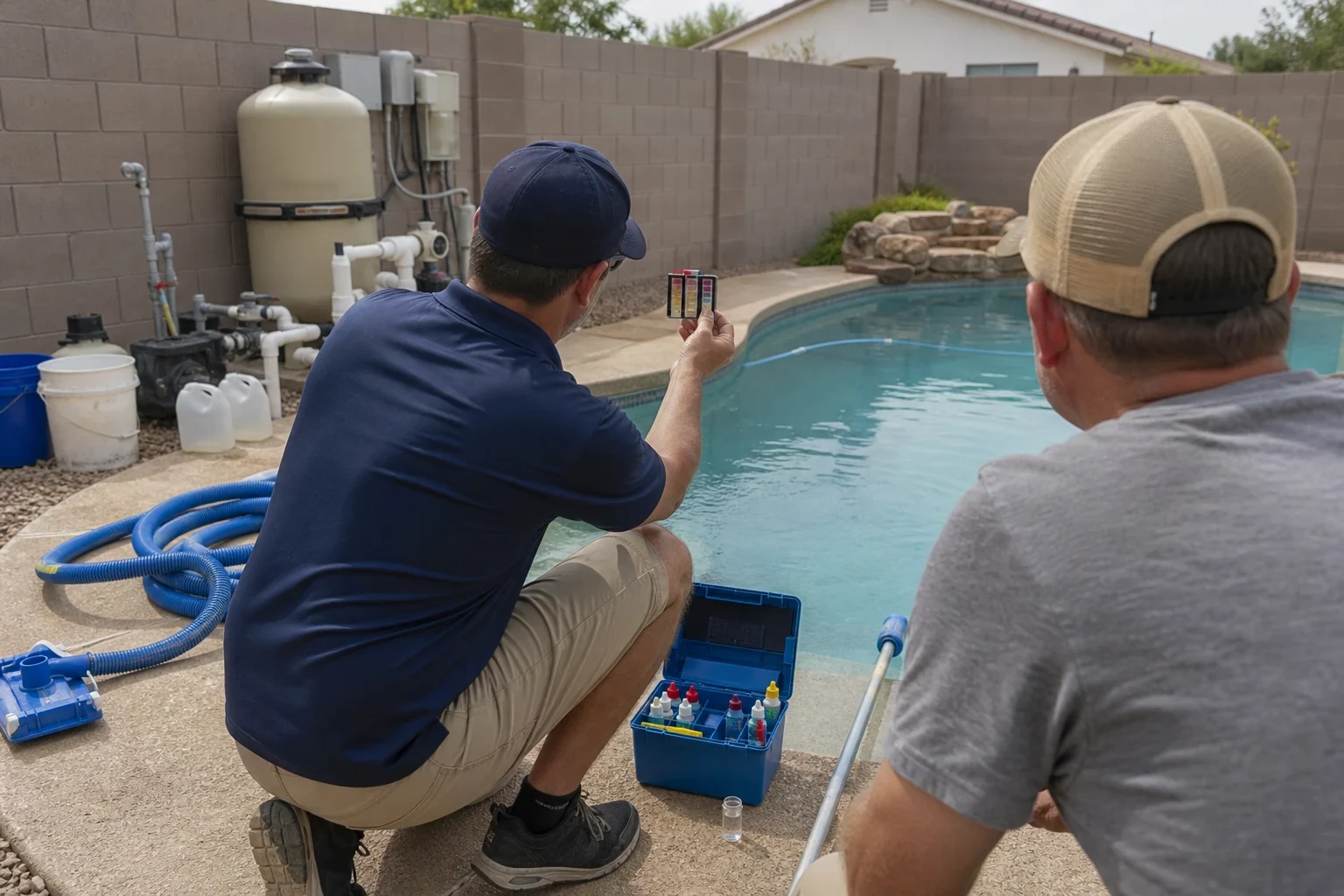
- Once the tile is clean we test calcium hardness, pH and alkalinity and adjust them toward a balanced saturation level. Water that is less eager to deposit minerals keeps the line from returning as fast.
Signs Your Tile Needs Attention
A white crust at the waterline
A chalky band that comes back right after you wipe it is early carbonate scale. This is the easiest stage to clean.
A rough gray line that will not budge
Hard gray buildup that feels like sandpaper is often silicate scale. Scrubbing harder at this stage usually scratches the tile before it removes the scale.
Tile that looks dull after brushing
If glass or glazed tile has lost its depth and shine, a thin mineral film is likely sitting on the surface.
Spots on water features
Spillways, sheer descents and raised walls collect white streaks where water splashes and dries.
Grout lifting at the waterline
Scale can wedge into grout joints and push them apart. Catching it early protects the tile line itself.
What Shapes the Price
Each quote reflects your pool, your tile and how much scale is on it. We explain the price before work starts so there are no surprises later. Early cleaning is almost always the less expensive path, since thin scale comes off faster and with less risk to the tile.
Length of the tile line
A larger perimeter, a spa or extra steps mean more tile to clean.
Type and thickness of scale
Soft carbonate film is quicker work. Thick silicate scale takes more time and usually calls for blasting.
Tile material
Glass and natural stone need gentler media and slower passes than standard glazed ceramic.
Water features and access
Raised walls, spillways and tight spots near rock or landscaping add detail work.
How the Work Goes
- 1
Talk it through by phone
You get a free quote by phone. We ask about your tile type, how long the scale has been building and whether you have water features, then set a time to look in person if needed.
- 2
Prepare the pool
We may lower the water a few inches to expose the full scale line. Equipment is switched off and the deck around the work area is covered.
- 3
Test, then remove
We start on a small, out-of-the-way section to confirm the method is safe for your tile. Then we work the full perimeter and check the surface by touch as well as by eye.
- 4
Clean up and rebalance
Loose media and debris are vacuumed out, the water is brought back to level and the chemistry is adjusted. We show you the finished tile and explain what will slow the next buildup.
Calcium Removal Questions
Will blasting scratch my glass tile?
Not with the right media and pressure. We use a soft, fine media for glass and always test a small area first. If a section looks at risk, we switch to careful hand work there instead.
Can I just use a pumice stone myself?
Pumice can work on light scale over sturdy ceramic tile. On glass or glossy glazes it often leaves fine scratches that hold dirt and make future buildup cling harder. If you try it, keep the stone wet and use light pressure.
How long before the scale comes back?
That depends mostly on your water. With balanced calcium hardness and pH, buildup returns slowly and stays soft enough to brush off. Regular weekly pool cleaning helps keep the chemistry steady, and with our weekly service chemicals are included in the monthly price.
Is this the same as an acid wash?
No. Tile cleaning targets the waterline tile and the pool stays mostly full. An acid wash treats the plaster surface of a drained pool. If your water hardness is extremely high, we may suggest a pool drain and refill so fresh water starts the cycle over.
How long does the job take?
Most pools are finished in a single visit. Thick silicate scale, long tile lines or several water features can extend that. We give you a realistic idea of timing when we quote the work.
Bring Back the Tile You Paid For
Tell us about your pool and the buildup you are seeing. We will explain the gentlest way to remove it and what keeps it from returning.